Pain in the ears has a way of grabbing our attention. An infant pulling at their ear or an adult grimacing late into a conference presentation are signs of ear infections, which are uncomfortable, annoying and often confusing. Just as research from home treatments to the most advanced Ear Infection Treatment in Ahmedabad is done by experts, so do ear problems lead us to quick, efficient solutions. But here’s the reality: ear infections do not present or behave the same in adults and children.
Knowing the difference can prompt faster action, better care and a lower chance of complications.
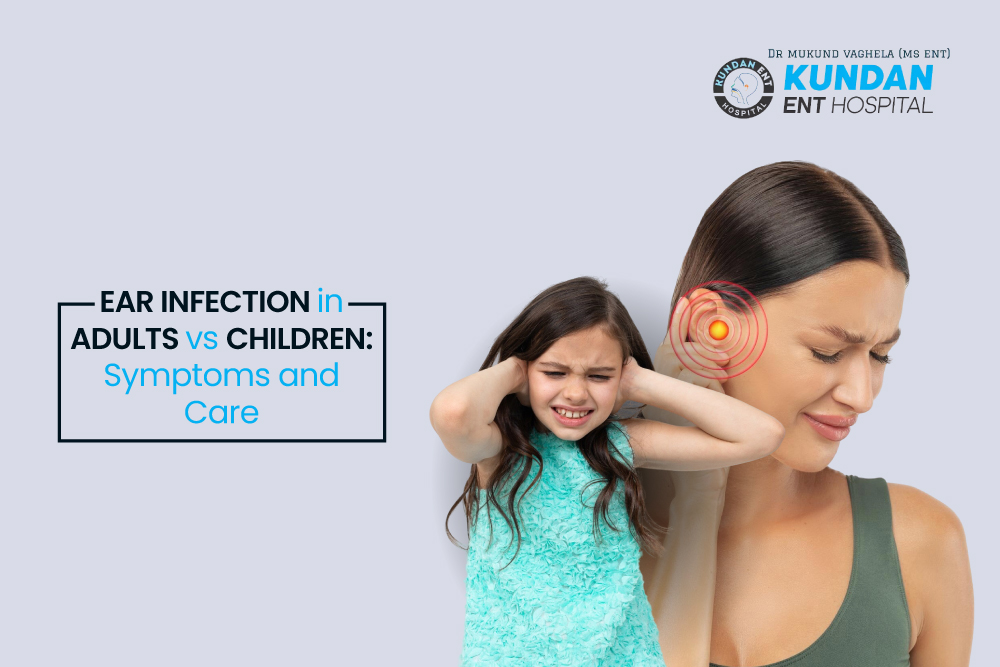
Why Ear Infections Are More Common in Children
Anatomy also plays a large part, and that is another reason children suffer ear infections more than adults. Their Eustachian tubes, tiny passageways that connect the middle ear to the back of the throat and help drain fluid, are shorter and more horizontal. It allows bacteria and viruses to get trapped more easily.
Add to that :
- Developing immune systems
- Frequent colds and throat infections
- Germy schools and daycare
The result? Increased risk of middle ear infection, particularly in those under age five.
Common Symptoms of Ear Infection in Children
Not every child will be able to articulate what they are experiencing, so their symptoms can manifest in behaviour.
Look out for :
- Constant ear pulling or rubbing
- Excessive crying, specifically while your baby is lying down
- Fever
- Trouble sleeping
- Fluid draining from the ear
- Inability to hear or react to sounds
In infants, feeding difficulties or increased fussiness might indicate that there is ear discomfort.
Ear Infections in Adults: Less Common, Often More Serious
Ear infections are, however, less frequent in adults, and they tend to be associated with an underlying condition, such as a sinus infection, smoke exposure or chronic colds, that may complicate them. While kids' ear infections are generally harmless, by the time they affect adults, they can signal structural issues or chronic inflammation.
Symptoms of Ear Infection in Adults
It’s easier for adults to explain their pain, and that makes early diagnosis possible.
Common signs include :
- Sharp or dull ear pain
- A sensation of fullness or pressure in the ear
- Temporary hearing loss
- Ringing or buzzing sounds
- Fluid discharge
- Dizziness or balance issues
Sometimes the pain can travel to the jaw or neck, which is one reason it can so easily be mistaken for a dental issue or creative muscle soreness.
Ear Infection in Adults vs Children: Key Differences
Although the origin seems to be consistent, the experience is distinctive.
- Frequency : Ear infections are more prevalent among children than adults
- Communication : Adults can verbalise pain; children express it through behaviour
- Risk factors : Anatomy in children, lifestyle and comorbidities in adults
- Complications : Repeated infections in kids can lead to delays in speech development; adults with untreated infections may experience hearing loss.
Knowledge of these differences allows patients and those caring for them to take steps in the right direction, instead of waiting.
Care and Treatment Options
Treatment is dependent on the patient’s age, severity and cause.
For Children :
- Mild cases may go away by themselves
- Painkillers recommended by your doctor
- Antibiotics only when necessary
- Warm compresses for comfort
Parents are frequently counselled to “wait and see” for 24–48 hours in nonsevere cases.
For Adults :
- Treating any underlying sinus or allergy conditions
- Antibiotics may be prescribed as ear drops or in pill form
- Do not self-clean with earbuds and sharp objects
- Rest and hydration
Brands that you ignore can keep coming back as infections or lingering pain.
When to See a Doctor
Medical attention is essential if :
- Pain lasts more than two days
- Fever is high or persistent
- Pus or blood-like discharge
- Hearing loss doesn’t improve
- Dizziness or facial weakness occurs
Prompt diagnosis is important to reduce the length of illness and long-term sequelae.
Simple Prevention Tips for All Ages
Not all ear infections are preventable, but you can reduce the chances of your child getting one in the following ways :
- Address colds and sinus infections ASAP
- Maintain good hand hygiene
- Dry your ears out after swimming or bathing
- Quit smoking and stay away from secondhand smoke
- Changing or never sticking things in the ear canal
As for kids, getting vaccinated on time also means it’s less likely they’ll end up sickened.
Final Thoughts
Ear infections might be considered routine, but they aren't fun, and certainly should not be downplayed at any age, with adult ear infection vs child. With earaches, what appears to be a single problem might mean two very different things, depending on the age of the sufferer. Attending to symptoms, acting promptly and seeking the right care can help make the recovery process smoother and quicker for kids and adults alike.
If ear pain is definitely not going away, or if it’s suddenly disrupting your life, it’s always best to talk with a healthcare provider, rather than resorting to guesswork. Visit Kundan ENT for the best results.
Your ears do a lot for you, every day, show them some love.